Subtropical Gulf moisture and heavy seasonal rainfall make Mobile County one of the most active Formosan subterranean termite regions in the United States. Unlike standard surface sprays that leave framing exposed,…
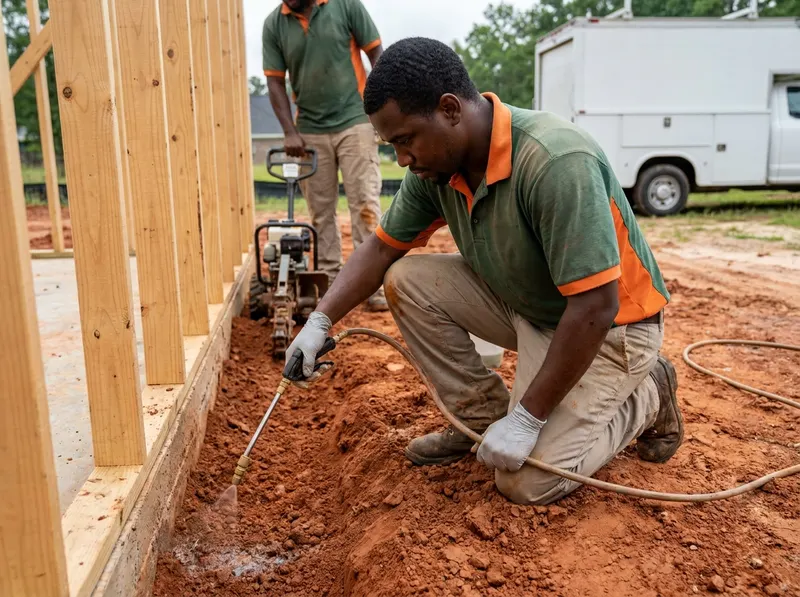
Subtropical Gulf moisture and heavy seasonal rainfall make Mobile County one of the most active Formosan subterranean termite regions in the United States. Unlike standard surface sprays that leave framing exposed, proper prevention requires direct subterranean barriers. In older architectural zones like the Oakleigh Historic District and Church Street East Historic District, brick piers, damp crawlspaces, and heart-pine subfloors benefit from localized liquid trenching and non-repellent termiticide barriers along foundation masonry. For slab-on-grade developments across Cottage Hill, Llanfair, and Bertha Hills, chemical applications directly to compacted fill before the vapor barrier and concrete pour establish an uninterrupted protective horizontal plane that stops subterranean colonies from finding plumbing penetrations.
Pre-construction treatments present two distinct options during the building cycle: horizontal liquid soil treatments or vertical borate wood applications. If a property is at the graded dirt stage prior to the foundation pour, horizontal soil saturation creates a continuous chemical shield beneath the entire footprint. If framing is already standing under roof in Ashland Place or Spring Hill, liquid sodium octaborate tetrahydrate applied directly to the bottom 24 inches of wood studs, sill plates, and sheathing penetrates the structural lumber, making the wood fiber toxic to subterranean foragers. The operational trade-off centers on timing: soil treatments require exact coordination with concrete contractors before the slab is laid, whereas wood borate applications allow flexible scheduling during dry-in before drywall installation.
Protective protocols follow a clear three-step sequence to satisfy building codes and local real estate transfer requirements. First, technicians verify moisture readings and soil grades around the crawlspace piers or footer trenches. Second, the calibrated application delivers termiticide into the soil volume or penetrates interior framing members along the perimeter sill plates. Third, official state treatment documentation, including HUD-form compliance paperwork for new construction loans, is recorded to certify the building envelope against future pest migration.
Every job gets a firm, written price after a free on-site visit.
Tell us about your termite prevention and pre-construction treatments job in Mobile and we'll send a clear, written quote, usually the same day.
 Nuvetra Pest Management