Gulf Coast rainfall and sustained summer relative humidity averaging above 75% in Mobile County turn traditional vented crawl spaces into open moisture funnels. In historic districts like Oakleigh and Church Street…
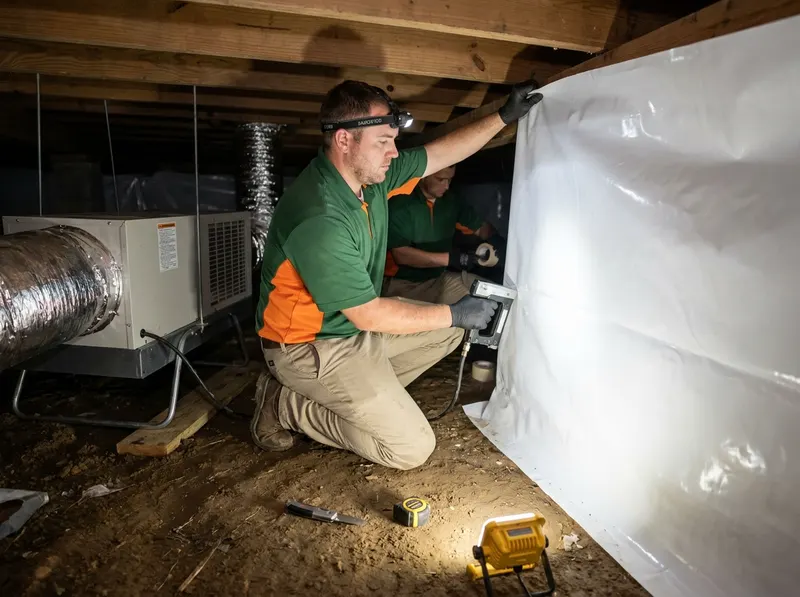
Gulf Coast rainfall and sustained summer relative humidity averaging above 75% in Mobile County turn traditional vented crawl spaces into open moisture funnels. In historic districts like Oakleigh and Church Street East, continuous brick piers draw groundwater upward via capillary action, keeping pine joists wet enough to foster wood-decay fungi and subterranean termites. Vented crawl spaces in areas like Spring Hill and Midtown allow warm, moisture-laden outdoor air to hit cool, air-conditioned floor cavities, creating heavy condensation on subflooring. Sealing foundation vents and anchoring a reinforced 20-mil antimicrobial liner up foundation walls transforms the under-home area into a clean, conditioned envelope that permanently denies harborage to perimeter pests.
A simple 6-mil unsealed builder-grade plastic tarp laid over the dirt floor reduces some ground vapor but fails to halt ambient air exchange, leaving rim joists vulnerable to wood-destroying insects. Full encapsulation seals the ground, masonry columns, and perimeter foundation walls, pairing the physical barrier with an energy-efficient dehumidifier calibrated to run only when subfloor humidity passes 55%. The trade-off involves the upfront cost of dedicated equipment and minor routine filter maintenance versus continuous floor sagging, musty odor infiltration through floorboards, and recurring structural repair costs caused by wood roach colonies and native subterranean termites.
Properties in Cottage Hill, Ashland Place, and Bertha Hills frequently feature combinations of cast-iron plumbing transitions and wood sill plates set close to natural grade. Encapsulation establishes clear, unobstructed termite inspection gaps, minimum 3 inches of exposed foundation wall beneath sill plates, allowing structural inspectors to monitor subterranean termite activity without hindrance. The project sequence follows four systematic phases: 1. Clearing organic debris and leveling the soil bed. 2. Securing heavy-mil polyethylene with mechanical anchors and seam mastic. 3. Sealing exterior wall vents with insulated foam blocks. 4. Positioning and ducting a commercial-grade low-temperature dehumidifier with automatic gravity drainage.
Every job gets a firm, written price after a free on-site visit.
Tell us about your crawl space encapsulation and dehumidification job in Mobile and we'll send a clear, written quote, usually the same day.
 Nuvetra Pest Management