Formosan subterranean termites differ fundamentally from native subterranean termites in colony density and structural risk. A single native subterranean colony typically contains 200,000 to 500,000 individuals,…
Formosan subterranean termites differ fundamentally from native subterranean termites in colony density and structural risk. A single native subterranean colony typically contains 200,000 to 500,000 individuals, whereas a mature Formosan colony often exceeds 3 to 10 million workers. Formosan termites also construct aerial carton nests inside wall voids using chewed wood, soil, and saliva, which enables them to survive without continuous ground contact if plumbing leaks or condensation provide sufficient moisture. In coastal Mobile County, annual swarms run between April and July, triggered by warm, humid evenings above 70 degrees Fahrenheit.
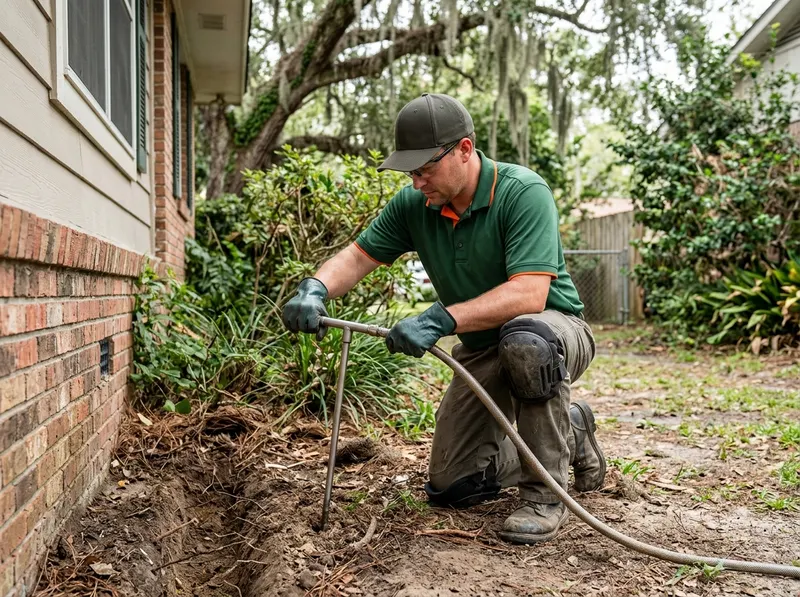
Structural protection methods require matching local building styles to the specific biology of each termite species. For historic raised-pier structures in the Oakleigh Historic District, Church Street East Historic District, and Midtown, technicians apply continuous termiticide barriers around each brick or concrete pillar, alongside sub-floor crawlspace evaluations that address high wood moisture levels. In slab-on-grade homes common throughout Cottage Hill, Llanfair, and Bertha Hills, perimeter trenching places a protective liquid termiticide four to six inches into the soil along the exterior stem wall, with vertical masonry drilling through attached garage slabs and patio joints at 12-inch intervals to seal unexposed entry routes.
Liquid soil treatments and continuous monitoring bait stations represent the two primary management pathways. A liquid barrier using non-repellent termiticides creates an undetectable continuous zone; foraging workers unknowingly carry the active ingredient back through the colony via grooming and food sharing within 30 to 90 days. In contrast, in-ground bait stations placed every 10 to 15 linear feet around the property perimeter intercept active foraging galleries using chitin synthesis inhibitors that disrupt molting cycles, eliminating the reproductive queen and the entire nest over 90 to 180 days. A liquid barrier offers immediate structural boundary isolation, whereas bait systems eliminate colonies at the perimeter without requiring extensive masonry drilling along interior tile or decorative patios.
Every job gets a firm, written price after a free on-site visit.
Tell us about your formosan and subterranean termite protection job in Mobile and we'll send a clear, written quote, usually the same day.
 Nuvetra Pest Management