Targeted mosquito barrier protection operates by targeting adult daytime resting zones rather than fogging open air. Mobile receives an average of 66 inches of annual rainfall, creating persistent high humidity in…
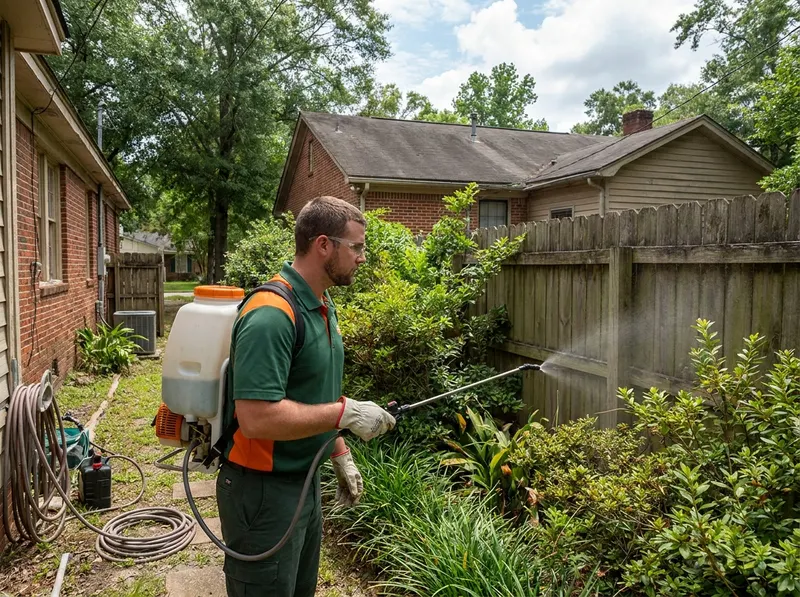
Targeted mosquito barrier protection operates by targeting adult daytime resting zones rather than fogging open air. Mobile receives an average of 66 inches of annual rainfall, creating persistent high humidity in low-lying corridors like Eslava Creek and the shaded, mature live oak canopies of Spring Hill, Ashland Place, and Midtown. Female mosquitoes require stagnant moisture to breed and spend hot daylight hours clinging to the underside of leaves on azaleas, camellias, and privet hedges. Technicians apply a low-pressure electrostatic mist to these specific harborage points. The residual insecticide bonds to leaf cuticles and porous wood fencing, drying within 30 minutes to create an active barrier that eliminates resting mosquitoes on contact without washing off in typical afternoon thunderstorms.
Properties in historic areas such as the Oakleigh Historic District and Church Street East often feature historic raised-brick foundations, damp crawl space vents, and perimeter courtyard walls where stagnant air accumulates. In contrast, suburban lots across Cottage Hill, Llanfair, Hannon Park, and Bertha Hills frequently deal with property-line drainage swales and retention runoff. A barrier spray specifically suits yards with dense perimeter plantings, outdoor entertaining spaces, and persistent shade. It does not fit open, unshaded turf expanses where mosquitoes rarely rest during daylight hours; broad-scale lawn spraying provides minimal adult mosquito control and risks unnecessary chemical exposure to beneficial soil organisms.
Choosing targeted barrier applications over whole-property misting systems involves specific operational trade-offs. Automated misting systems require permanent lines, high upfront hardware costs, and continuous insecticide reservoir refills, yet they can overspray during erratic winds off Mobile Bay near USS Alabama Battleship Memorial Park. Targeted barrier treatments use targeted hand-directed equipment to focus strictly on structural perimeters and dense foliage, leaving open lawns and blooming pollinator beds untreated. Because heavy rains along the Gulf Coast gradually break down active residuals, barrier maintenance requires reapplication every three to four weeks from March through October to match the biological breeding cycle of local mosquito species.
Every job gets a firm, written price after a free on-site visit.
Tell us about your targeted mosquito barrier protection job in Mobile and we'll send a clear, written quote, usually the same day.
 Nuvetra Pest Management